
Why Your Restaurant Needs an Oyster Tank
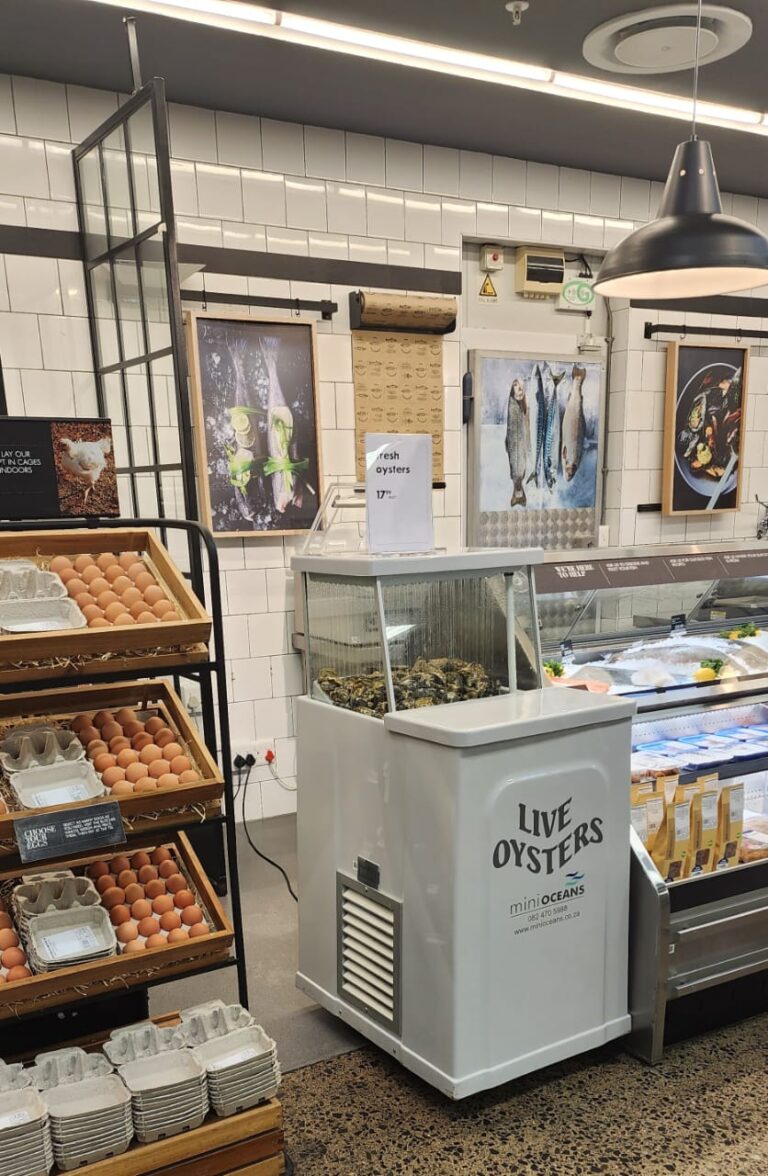
Aquaculture, display, and freshness all matter – but nowhere more so than with oysters. Restaurants that sell oysters can greatly benefit from installing live oyster tanks. Here’s why an oyster tank isn’t just a luxury – it’s a better way to ensure quality, safety, and profit.
The Problem: Common Storage Methods & Their Limitations
Many restaurants use ice, cold refrigerators, or even simple chilled holding bins to store oysters. These methods have serious drawbacks:
- Ice or layered ice storage often leads to temperature fluctuations as ice melts; excess water drains off, which can flush out or dilute the oyster’s natural liquor. This affects taste and causes oysters to dry out or deteriorate faster.
- Refrigeration alone without proper filtration or clean, circulating seawater does nothing to remove parasites or pathogens in the water around oysters. Oysters in still or dirty water continue to accumulate toxins or bacteria.
- Freezing or harsh treatments kill live oysters, destroying texture and flavour, and often shortening shelf life when defrosted or rehydrated.
A study of slipper oysters (Crassostrea iredalei) found that:
- Stored at room temperature (≈ 24 °C), oysters spoiled in just 2 days.
- On ice (3-4 °C) under a blanket, they lasted ~14 days.
- Chilled (≈ 4 °C) properly, the shelf life increased to ~22 days.
These figures show that temperature control helps – but still doesn’t address pathogens, parasites, or flavour/taste degradation resulting from non-ideal water quality or handling.
What an Oyster Tank Does Better: Filtration, Parasite Removal, Taste & Shelf Life
A purpose-built oyster tank integrates advanced water filtration, circulation, and sterilisation, which collectively improves safety, freshness, and appearance.
Filtration & Parasite / Bacterial Reduction
- A process called depuration (where live shellfish are placed in clean, sterilized seawater with continuous circulation) helps oysters purge many harmful bacteria, pollutants, and some parasites.
- For example, in improved depuration methods (chilled water plus UV sterilization), researchers reduced ≈ 99.9% of Vibrio bacteria over 4-5 days, while preserving taste and texture.
Shelf Life
- Because the water is clean, temperature is stable, and the oysters are kept alive, shelf life is extended compared to most passive cold storage methods.
- The same slipper oyster study (above) shows chilled live conditions extended life to ~22 days versus a couple of days at room temperature.
Visual Appeal & Marketing Power
In restaurants, how food is seen plays a big role in whether people buy.
- Studies show that visually appealing dishes can increase customers’ perception of quality by over 30%.
- Restaurants that invest in appealing presentation, especially in visuals for website / social media, get increased engagement and patronage. For example, high-quality food photography can lead to up to 30% more online orders or conversion when visuals are strong.
- Displays that highlight freshness, live appearance, water movement, clear water etc., make a stronger impression, setting a restaurant apart in terms of both aesthetics and trust.
Why an Oyster Tank is the Better Choice
Putting this together:
- More consistent freshness — live oysters in clean, filtered, circulating water stay alive longer, maintain their natural liquor, flavour, texture.
- Better safety — removal of bacteria, parasites via depuration or filtration + sterilisation reduces risk for raw consumers.
- Reduced waste — longer shelf life, fewer spoiled oysters means lower cost.
- Stronger marketing — visually appealing live tank acts as both display and advertisement; customers are more drawn to fresh, animated, “living” seafood displays.
- Competitive differentiation — few restaurants invest in this; doing so signals commitment to quality and freshness, which can command higher pricing and loyalty.
Every restaurant selling oysters should seriously consider installing an oyster tank. It’s an investment that isn’t just about presentation – it’s about consistency, safety, flavour, waste reduction, and ultimately, profit. At Mini Oceans, our oyster tanks are designed to deliver all of these benefits: advanced filtration, UV or sterilisation options, stable temperature, clear seawater circulation – all structured to keep oysters alive, clean, and delicious for longer. Your restaurant (and your customers) deserve no less.
References
- Seafish UK – Oysters and Water Quality (depuration & safety)
https://www.seafish.org/responsible-sourcing/aquaculture-farming-seafood/species-farmed-in-aquaculture/aquaculture-profiles/oysters/water-quality/ - The Fish Site – Improved purification methods make oysters safer to eat (reduces Vibrio bacteria)
https://thefishsite.com/articles/oysters-safer-to-eat-with-improved-purification-method - SEAFDEC Aquaculture Department – Shelf life of slipper oysters under different storage conditions
https://repository.seafdec.org/handle/20.500.12066/2370 - Moldstud (Hospitality Blog) – “Food quality and guest satisfaction: Key insights for restaurants” (visually appealing food increases perceived quality)
https://moldstud.com/articles/p-food-quality-and-guest-satisfaction-key-insights-for-restaurants - PlayFood Marketing Blog – “The impact of quality food photography in food delivery” (up to 30% more orders from strong visuals)
https://www.playfood.com/post/the-impact-of-quality-food-photography-in-food-delivery
